
Who it is suitable for
The cochlear implant can be used for severe sensorineural hearing loss and unilateral deafness.
Severe sensorineural hearing loss Unilateral deafness
- Preglingually deaf children (in the first few years of life)
- Patients who could hear and have severe sensorineural hearing loss in the affected ear
- Patients who are either unilaterally or bilaterally deaf
- Hearing thresholds within the shaded range in the diagram that result in poor speech comprehension despite the best possible hearing aid supply
Note: a functioning auditory nerve is a prerequisite for a cochlear implant.
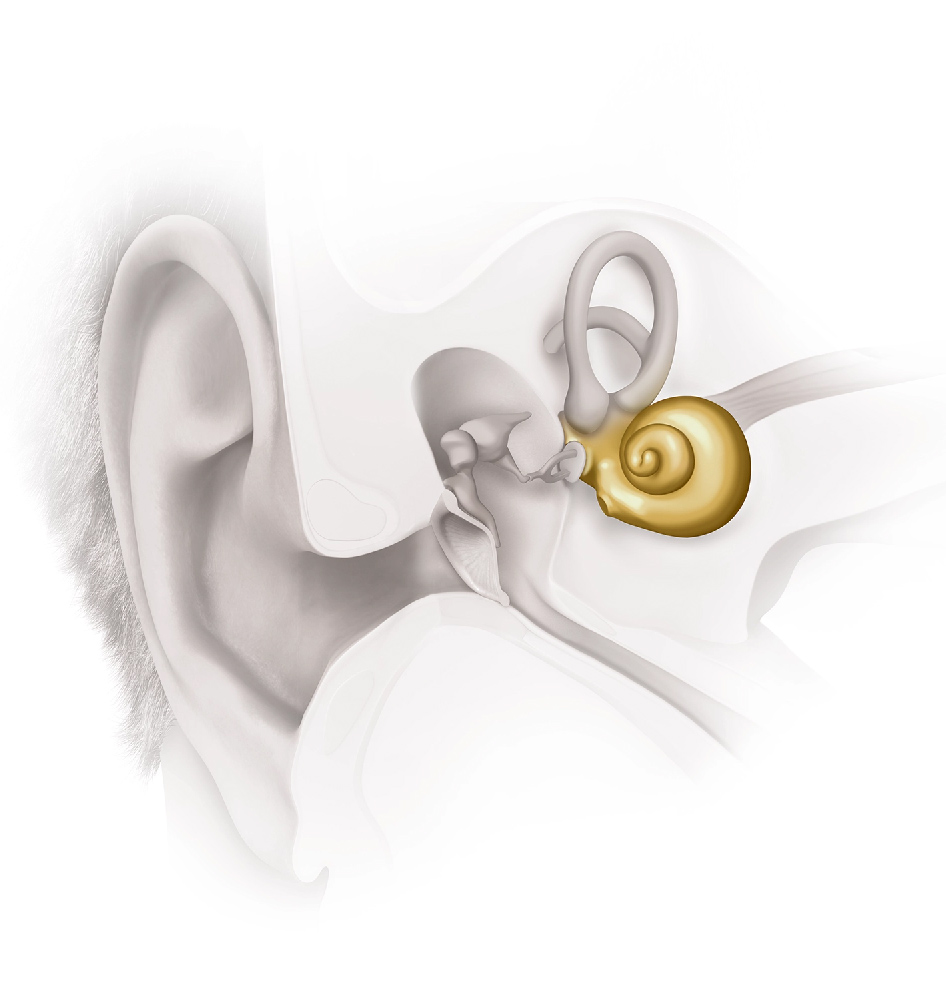

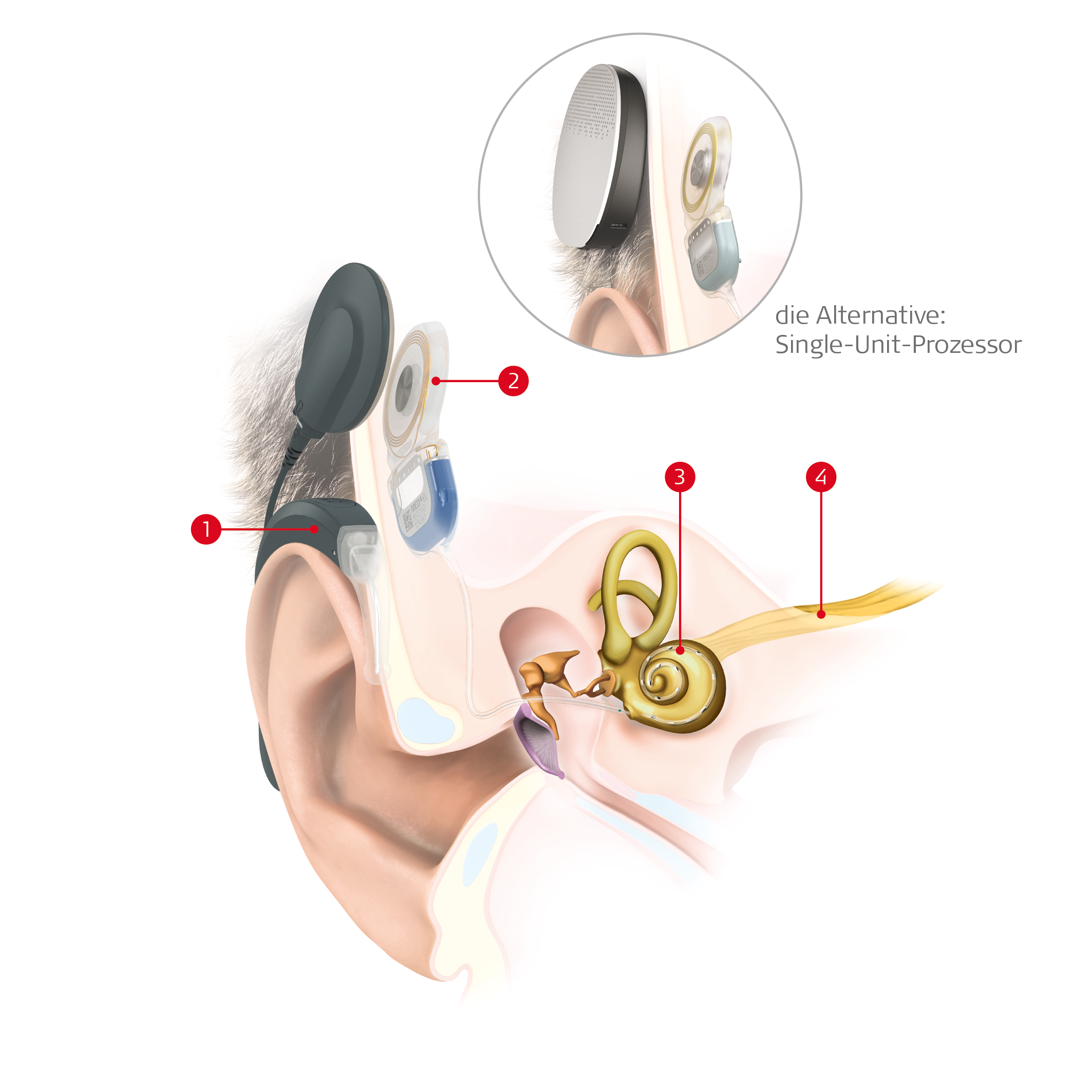
Cochlea-Implantat
- 1
Audio processor
The audio processor picks up sound signals, converts them into electrical signals and sends them to the implant. - 2
Cochlear implant
The cochlear implant converts signals into electrical impulses, which are then transmitted to the cochlea via an electrode array. - 3
Cochlea
In the cochlea, nerve cells are stimulated by electrical impulses stimulated. - 4
Auditory nerve
The auditory nerve conducts electrical impulses to the brain, where the signals are interpreted as sound.
Das können Sie erwarten
* SYNCHRONY 2 CI users can easily undergo an MRI scan with 0.2, 1.0, 1.5 and 3.0 Tesla, provided that the requirements of the instruction manual are met.

“For me, it is a true pleasure to be able to follow a conversation without any effort, without having to strain to look at the face or the lips.”

“Without cochlear implants, I would never have had so many opportunities. I’m endlessly grateful to my parents for making that decision for me 26 years ago.”
