
Who it is suitable for
EAS (electrical-acoustic stimulation) is a special type of cochlear implant in which the high frequencies are amplified via the implant and the low frequencies via a built-in hearing aid component. These two components are combined in an audio processor. Both components are combined in a single audio processor. Depending on the frequency, the audio processor converts the sound into either electrical signals or acoustic amplification.
High-frequency sensorineural hearing loss
- partial hearing loss in the high frequency range
- stable low-frequency hearing (no progression of hearing loss in this range)
- Hearing thresholds within the range shaded in the diagram that result in poor speech comprehension despite the optimal hearing aid supply
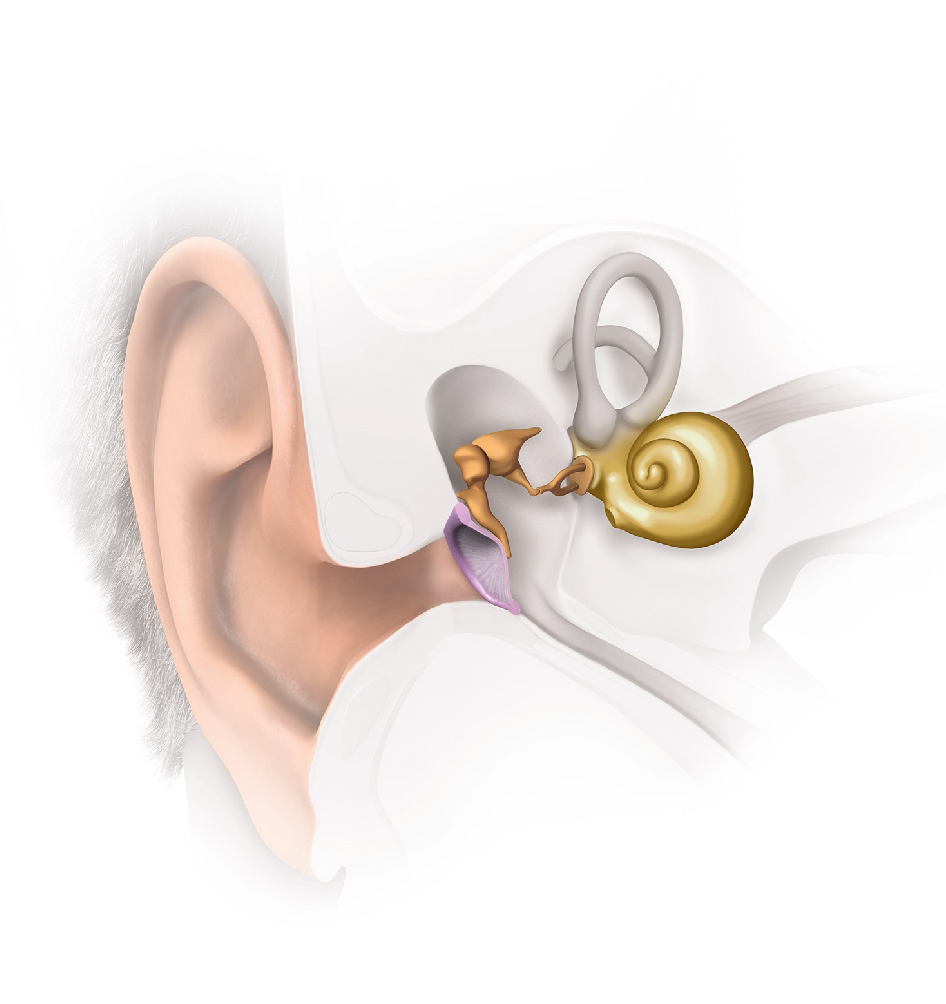

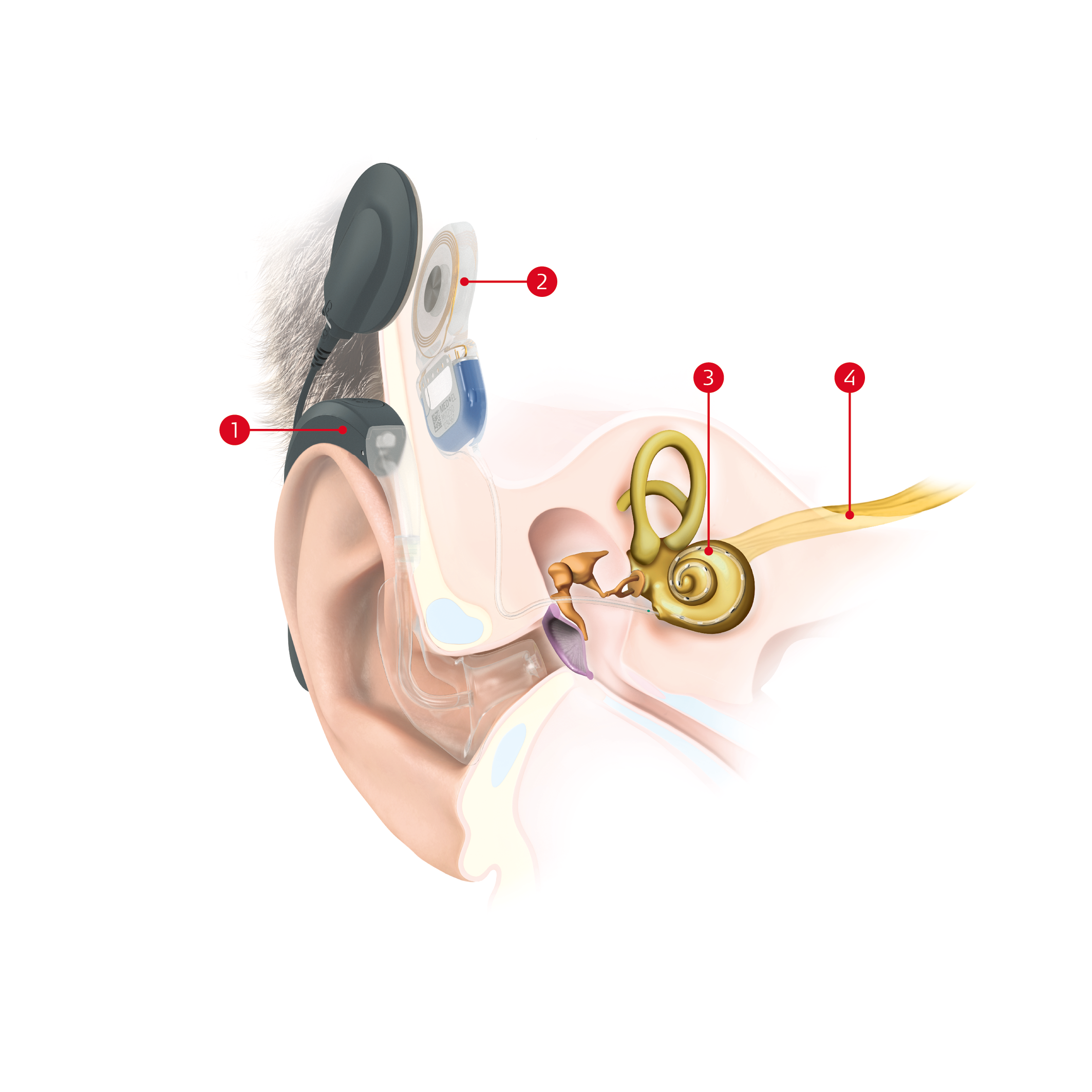
SYNCHRONY 2 EAS hearing implant
- 1
Audio processor
The audio processor captures sound signals, converts them into electrical signals and amplifies the low frequencies via the integrated hearing aid. - 2
EAS Hearing implant
The EAS hearing implant transforms the signals into electrical impulses, which are then transmitted to the cochlea via an electrode array. - 3
Cochlea
In the cochlea, nerve cells are stimulated by electrical impulses. - 4
Auditory nerve
The auditory nerve carries the electrical impulses to the brain, where they are interpreted as sound.
The benefits for your patients
* EAS SYNCHRONY 2 CI users can easily undergo 0.2, 1.0, 1.5, and 3.0 Tesla MRI if the requirements of the user manual are met.

“Itʼs as if someone has enchanted the world and filled it with many new, beautiful sounds.”
